Which beach in Crete works when it is windy?
Windy in Crete? That does not automatically cancel the beach day. The useful question is less about the most famous beach name and more about how exposed that stretch of coast is to the current wind. The bay next door is not automatic shelter either — sometimes another coast works better, and sometimes changing the plan is simply the nicer day.
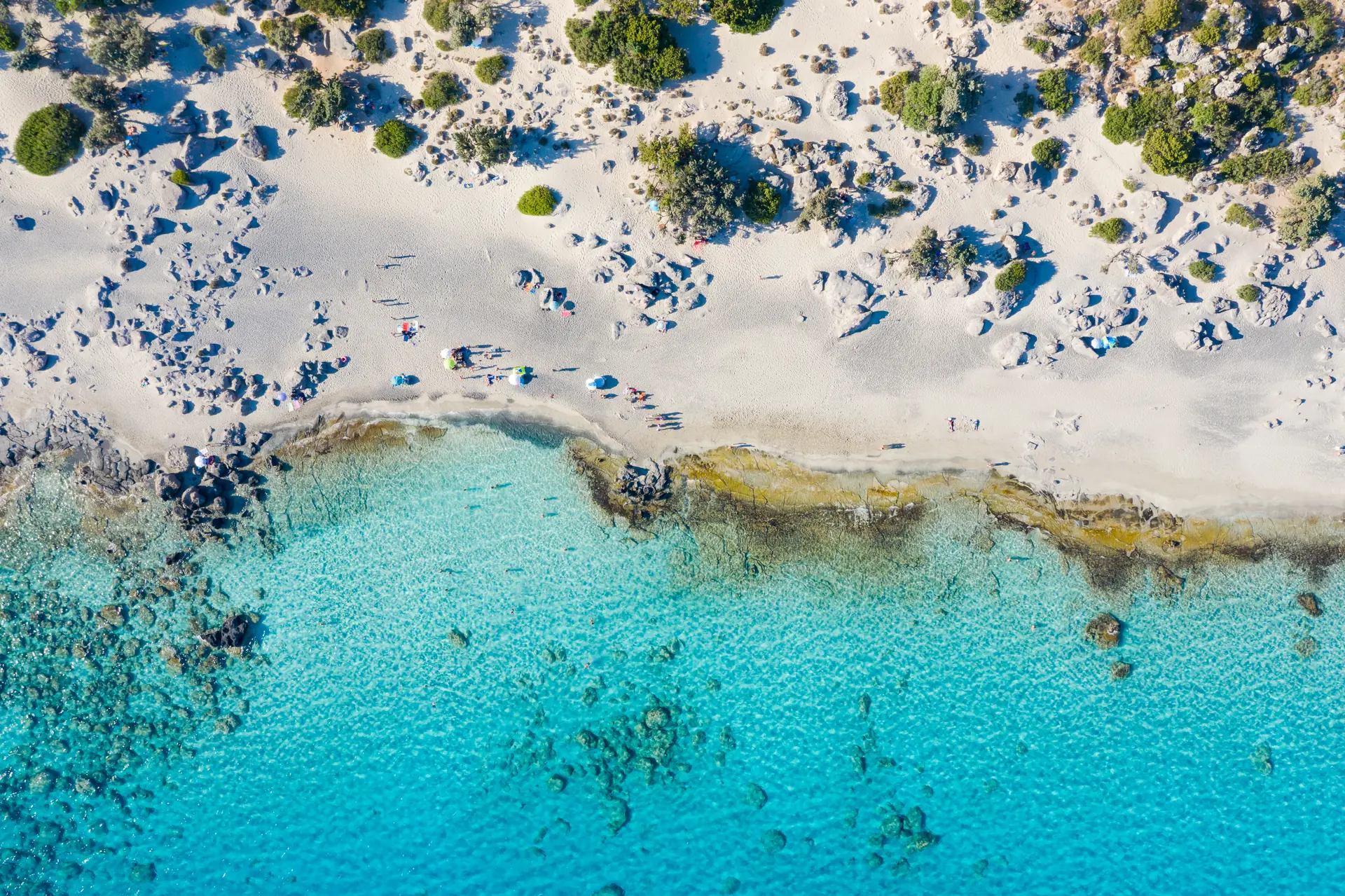
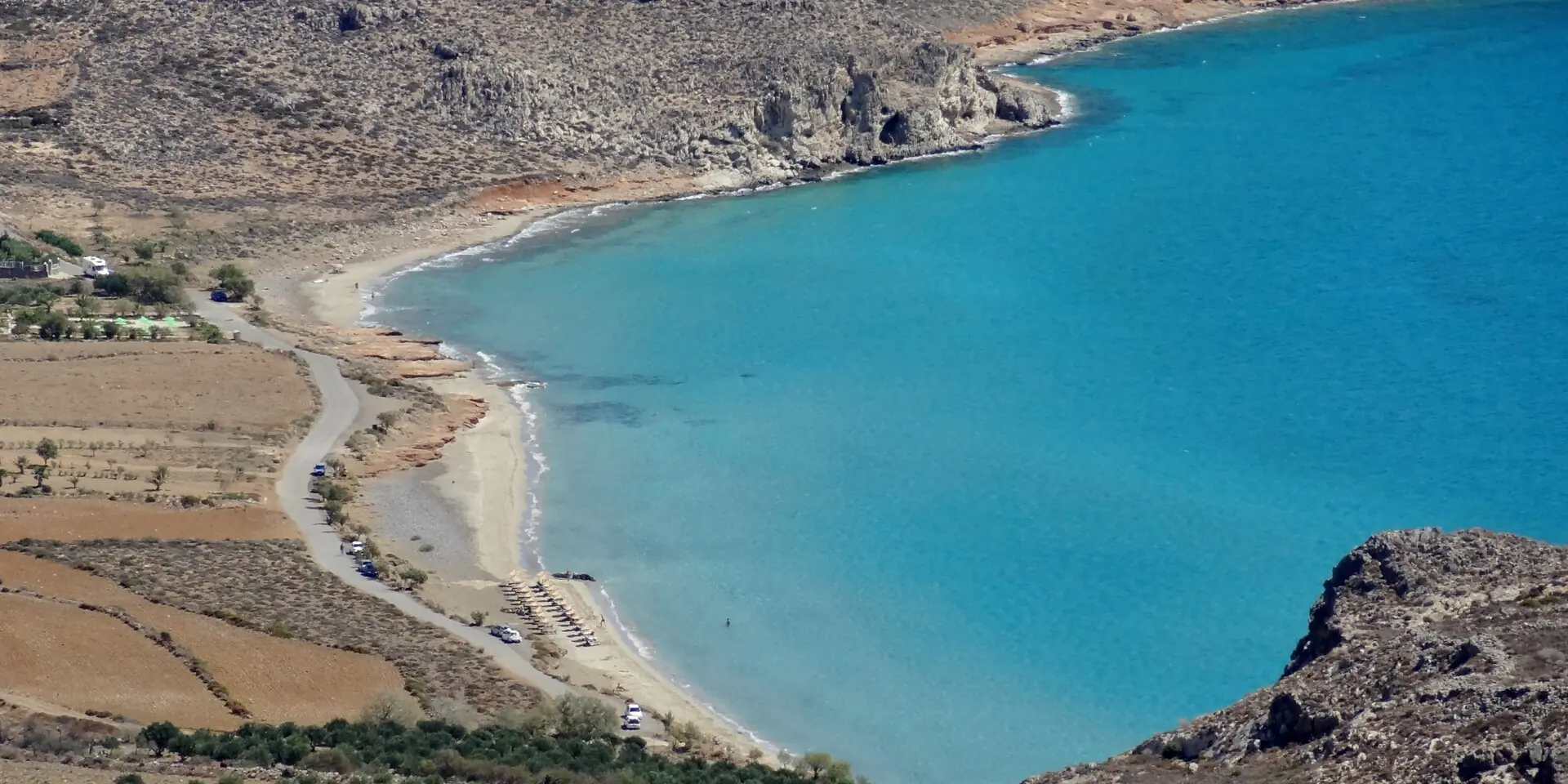
Documentary place imagery · not a live statement about weather, crowds, access or opening.
If you have ever tried to persuade a beach towel to stay put in a Cretan breeze, you already know the problem. One exposed coast can be restless while a differently oriented stretch of the same island feels far more comfortable.
So we do not chase the mythical beach that is always sheltered. There is no reliable version of that promise. It is more useful to understand what the wind is doing to the coast — and when another hour in the car has stopped being a clever rescue mission.
At a glance
- Check first
- Wind direction and strength. Together with the coast's orientation, they tell you far more than a generic beach ranking.
- Do not assume
- The next bay is not an automatic fallback. If it faces the same exposed coast, you may find exactly the same problem with a different pin on the map.
- If it does not fit
- Change coast or change the shape of the day rather than driving through several similar beaches on hope alone.
Why can Crete feel so windy in summer?
The Meltemi often shapes summer weather over the Aegean: a dry wind from northern directions, linked to the broader pressure pattern between south-eastern Europe and the eastern Mediterranean. It can persist for days in peak summer. Blue skies do not mean the sea will be calm.
Crete’s mountains and twisting coastline change the airflow locally. Some stretches can feel more exposed than others, but that is not a dependable north-versus-south rule. Check the actual wind direction, waves and the beach you want to visit instead of choosing by coast alone.
Start with where the wind is coming from
Before changing beach, check wind direction and strength. A bay facing the wind is more likely to pick up waves, blown sand and restless water. A turned coastline, headland or slope can make another stretch noticeably more comfortable on the same day — but never guarantees it.
That is less romantic than a list of ten supposedly windproof secret beaches. It is also much better at preventing the kind of coastal tour where, by stop number three, only the navigation app still sounds optimistic.
Why the next bay can be the same bad idea
Driving a few kilometres along the coast feels like the obvious fix. It only helps when the orientation genuinely changes. Two bays on the same exposed side can behave almost identically in strong wind.
That is why we do not give Maridati an automatic neighbouring fallback in strong wind. An honest “this corner is not a great fit today” is more useful than sending you to a differently named beach with the same flapping towel problem.
Four regions, four different answers to wind
Around Chania, Falassarna and Marathi show why the beach name alone tells you very little. Falassarna is open to the west coast, so westerly wind and a rougher sea matter for a long swimming stop. Marathi on Akrotiri has two more sheltered, south-facing bays and can feel easier than exposed stretches nearby. That is a better starting point, not a guarantee.
In Rethymno, Preveli is a useful counterexample to the shortcut that the south coast is automatically sheltered. The beach is open to the Libyan Sea, so current wind and waves still matter before committing to a long swim. The walk down — and especially the climb back — also makes a poor conditions call more expensive than at a roadside beach.
West of Heraklion, Agia Pelagia can look like the obvious bay solution. It is accessible and convenient, but northerly or north-easterly conditions can still make the water less comfortable. Looking sheltered on a map is not the same as fitting your actual day.
Lasithi shows the widest range: Chiona loses appeal for ordinary swimming in stronger wind, Maridati is not an automatic neighbouring fallback, and the open coast around Xerokampos reacts strongly to exposure. Kouremenos can turn the same wind into a positive when windsurfing or kitesurfing is explicitly what you came for.
- • Chania: Falassarna's open west coast and Marathi's more sheltered bays show how much orientation matters
- • Rethymno: Preveli proves that a south-coast beach is not automatically calm
- • Heraklion: Agia Pelagia still depends on the exact wind direction despite its bay setting
- • Lasithi: Chiona, Maridati, Xerokampos and Kouremenos react very differently depending on exposure and activity
And if today simply is not a beach day?
Sometimes the best beach decision is not testing a fourth beach. If nothing reachable looks convincing, a shorter swim attempt plus a village, landscape, culture stop or a long meal can save the day far better than another stretch of driving.
Check the conditions fresh for your actual travel day. Wind can change, and so can swell and access. That is what our day planner is meant to work with — not a static list pretending Crete signed a weather contract weeks ago.
Wind speed is only half the message
One wind-speed number is convenient, but it does not describe the whole beach day. Direction, gusts, coastal exposure and the actual sea state together decide whether an open bay still feels comfortable.
Do not look only at the largest wind icon in the forecast. The useful combination is where the wind comes from, when it strengthens, how exposed the beach is to that direction and what the water is doing.
North coast versus south coast is too simple
Summer Etesian winds in the Aegean often come from northerly directions. That is sometimes turned into the easy rule: just drive south. Crete's mountains, bays and local shoreline angles make the real picture more complicated.
Another side of the island may be better, but it is not automatic. Before buying a long cross-island drive, check whether the exposure actually changes. Otherwise you can end up with the same wind and more kilometres.
Read the day without doing a meteorology degree
Four questions are enough for a practical beach choice: where is the wind coming from, how strong and gusty will it be during your time window, how open is the beach to that direction, and does the predicted sea state still match the kind of day you want?
That is planning help, not permission to swim. On site, the real water, local warnings and your own ability matter more than a forecast. Weather data can inform the plan; the sea has not agreed to the spreadsheet.
Does this fit your day?
A good fit if this is what you want
- • Travellers who need an honest windy-day decision rather than a wish list
- • Rental-car days where moving on is possible but should not consume half the holiday
- • Anyone who wants to understand why a bay works today and not tomorrow
Probably not if this matters to you
- • A promise that a specific beach is sheltered on your day
- • A complete wind map of every beach in Crete
- • A safety assessment for swimming, waves or currents
What we know — and what to check today
What this guide is based on
- • Falassarna's open west-coast exposure and westerly-wind sensitivity, together with Marathi's more sheltered south-facing bays, are source-backed in the published Chania Place profiles.
- • Preveli's open south-coast exposure and Agia Pelagia's northerly/north-easterly sensitivity are source-backed in the published Rethymno and Heraklion Place profiles.
- • Wind sensitivity of Chiona and of the open section at Xerokampos is editorially reviewed.
- • Kouremenos is treated as a wind-sport option only when windsurfing or kitesurfing is explicitly what you want.
- • The general Meltemi context was checked on 26 September 2026 against the Hellenic National Meteorological Service; it is climate context, not a forecast for a specific travel day.
What can change
- • Wind direction and strength on the travel day
- • Swell and water clarity
- • Access, parking and crowding
Important on the day
- • This page is a practical way to think about windy beach days and names reviewed examples; it does not replace a current forecast.
- • The examples come from reviewed Place profiles in Chania, Rethymno, Heraklion and Lasithi. They show real contrasts, not a complete wind map of every beach in Crete.
- • Wind, swell, access and crowding stay day-dependent and can change at short notice.
- • Signage, barriers and on-site instructions always take precedence over any general recommendation.
Who is behind this — and how to correct us
We review our guides editorially and update them when things change on the ground. If you found something different, tell us.
Your note goes into manual review — nothing changes publicly until we can verify it.
Plan your Crete day
Add your starting point, travel date and preferences. We will check whether this place fits your day, alongside stops that make sense together.